A Simple, 2 Step Strategy to Solve Wordle-Style Games
This is a compilation of several dozen approaches that were tested by several users across Wordle, Wordle Archive, and multi-word variants like Quordle.
After testing and aggregating those strategies from multiple community sources, this is the version that stood up best in practice:
- Strategy to Solve Wordle by padomaki
- Wordle Words Analysis by hitsun
- The Actual Mathematical Optimal Wordle Strategy by swni
The goal here is not a theoretically perfect method. It is a fast, repeatable system that is easy to apply under normal play.
Step 1: Use 4 optimized starting words
Start every game with one of the following four-word sets, in any order.
Set 1
- COMET
- FLASH
- PUDGY
- BRINK
Set 2
- FAKES
- GLORY
- CHIMP
- BUNDT
These sets were chosen deliberately because they:
- cover 20 unique letters
- include all common vowels: A, E, I, O, U
- avoid overlap between guesses
After four guesses, you will usually have enough information to finish the puzzle in the final two attempts.
Step 2: Use logic to close the puzzle
Your last two guesses should focus on:
- checking whether any letters repeat
- finding the exact placement of the confirmed letters
- confirming whether the answer needs one more vowel or consonant
At this stage, brute force is rarely necessary. Careful elimination usually gets the job done.
For example, after running one of the opening sets, a board can become simple very quickly:
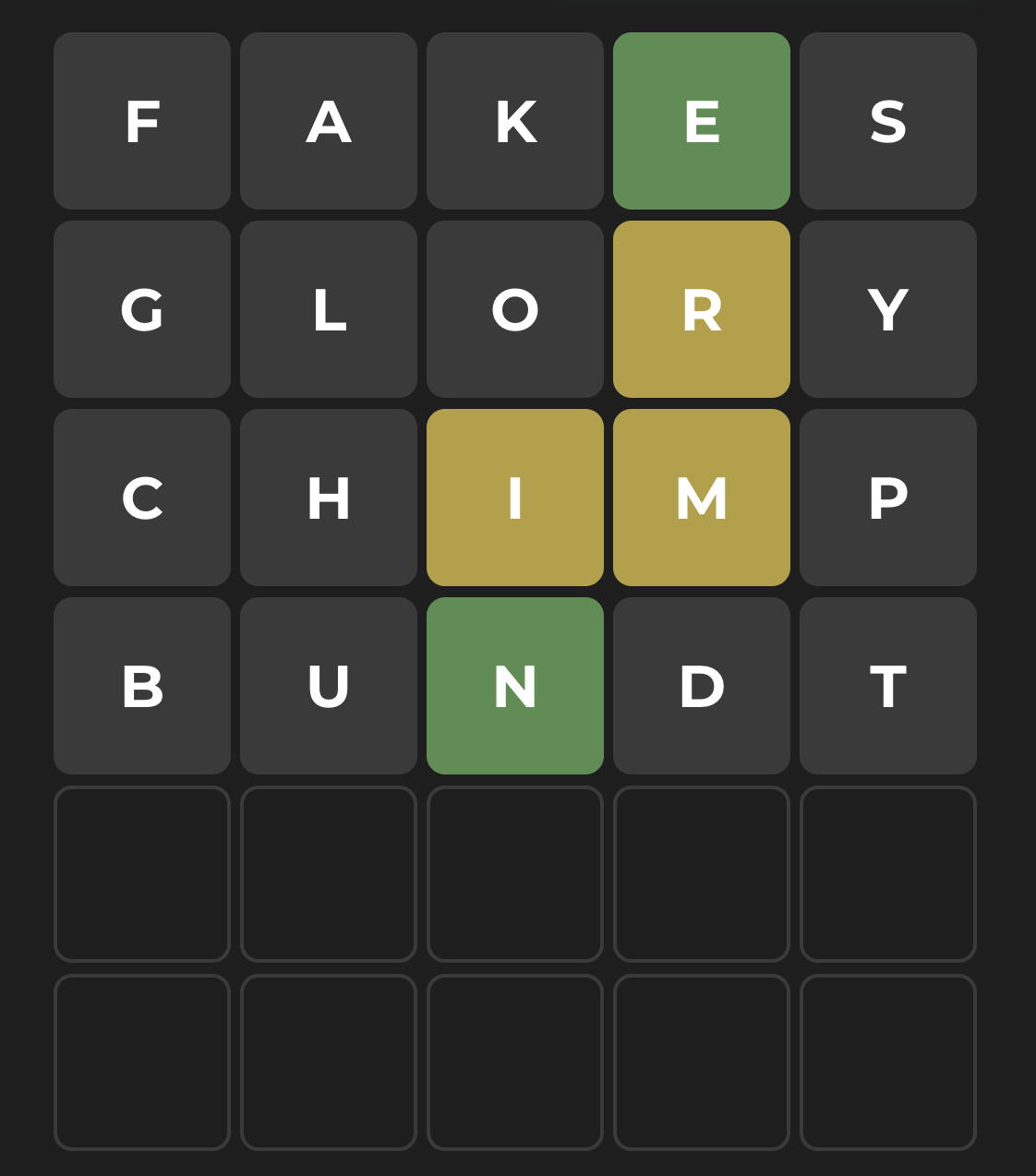
From there, you can often narrow the answer because the position data is already strong and only a small number of valid completions remain.
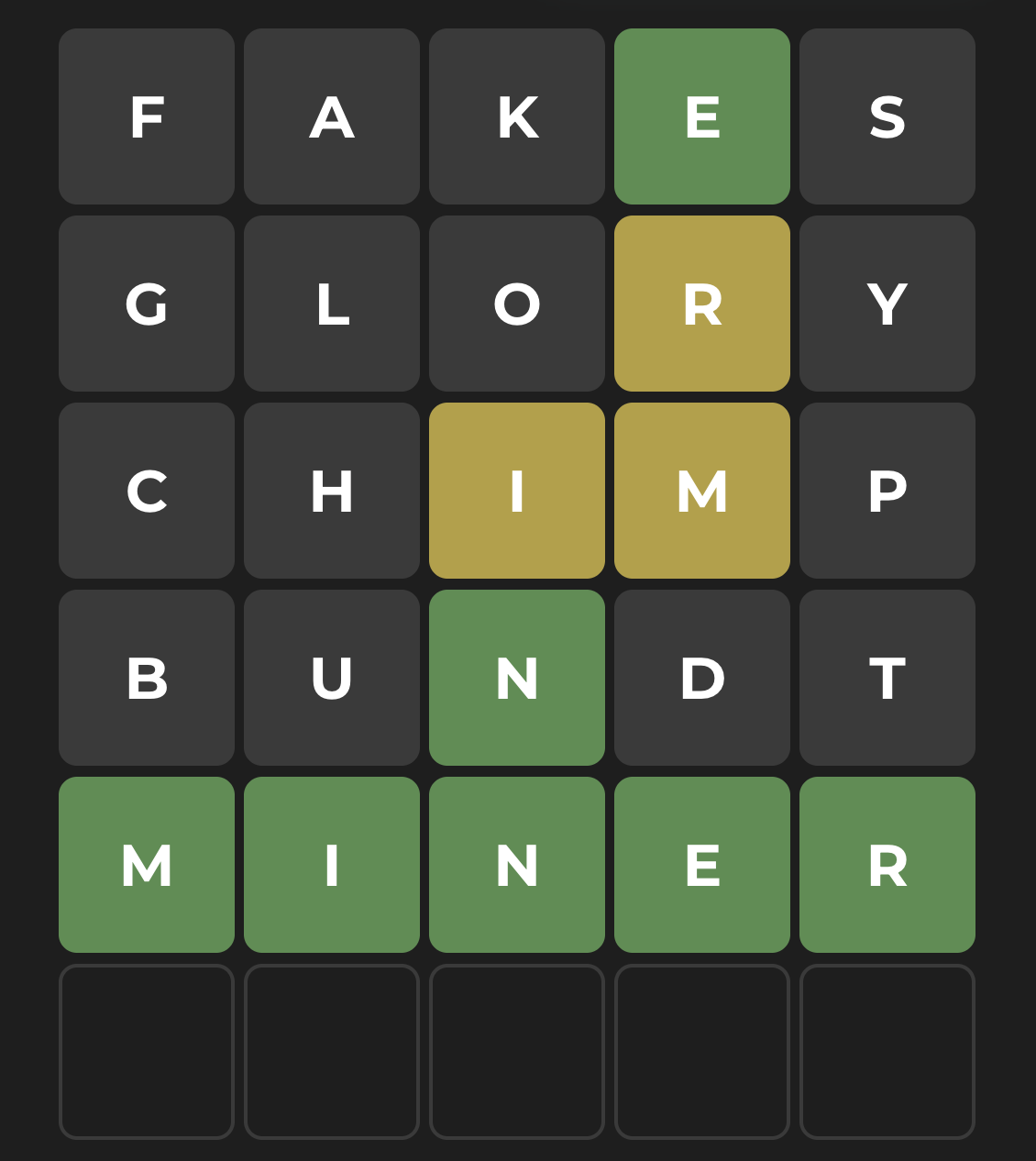
Does this ever fail?
In theory, yes. In practice, it is hard to find a target word that still leaves you completely blind by the sixth move.
Once the opener pattern becomes familiar, the strategy tends to produce two strong outcomes:
- most games are solved in well under two minutes
- difficult words still stay manageable without reckless guessing
Final thoughts
With a disciplined four-word opener, the rest of the puzzle becomes deduction instead of luck.
If you are chasing streaks, speed, or consistency, this approach gives you a reliable edge.
You can test it in Find the Word.